The TP-Link USB Bluetooth Adapter review centers on the UB500 Plus, a compact way to add Bluetooth connectivity to a desktop or laptop that lacks it.
Its Bluetooth 5.3 support and adjustable, multidirectional antenna make it a flexible option for connecting devices such as keyboards, mice, and headsets.
TP-Link UB500 Plus Review Summary
The quick verdict
1,000+ ratings
Read Amazon ReviewsTP-Link UB500 Plus
A practical pick for Windows PC owners who want Bluetooth 5.3 support and an adjustable antenna for connecting everyday wireless devices.
- Bluetooth 5.3 support with backward compatibility for Bluetooth 4.2, 4.0, 3.0, 2.1, 2.0, and 1.1.
- Adds Bluetooth connectivity to a non-Bluetooth desktop or laptop through USB.
- Includes Enhanced Data Rate (EDR) and Bluetooth Low Energy (BLE) technology.
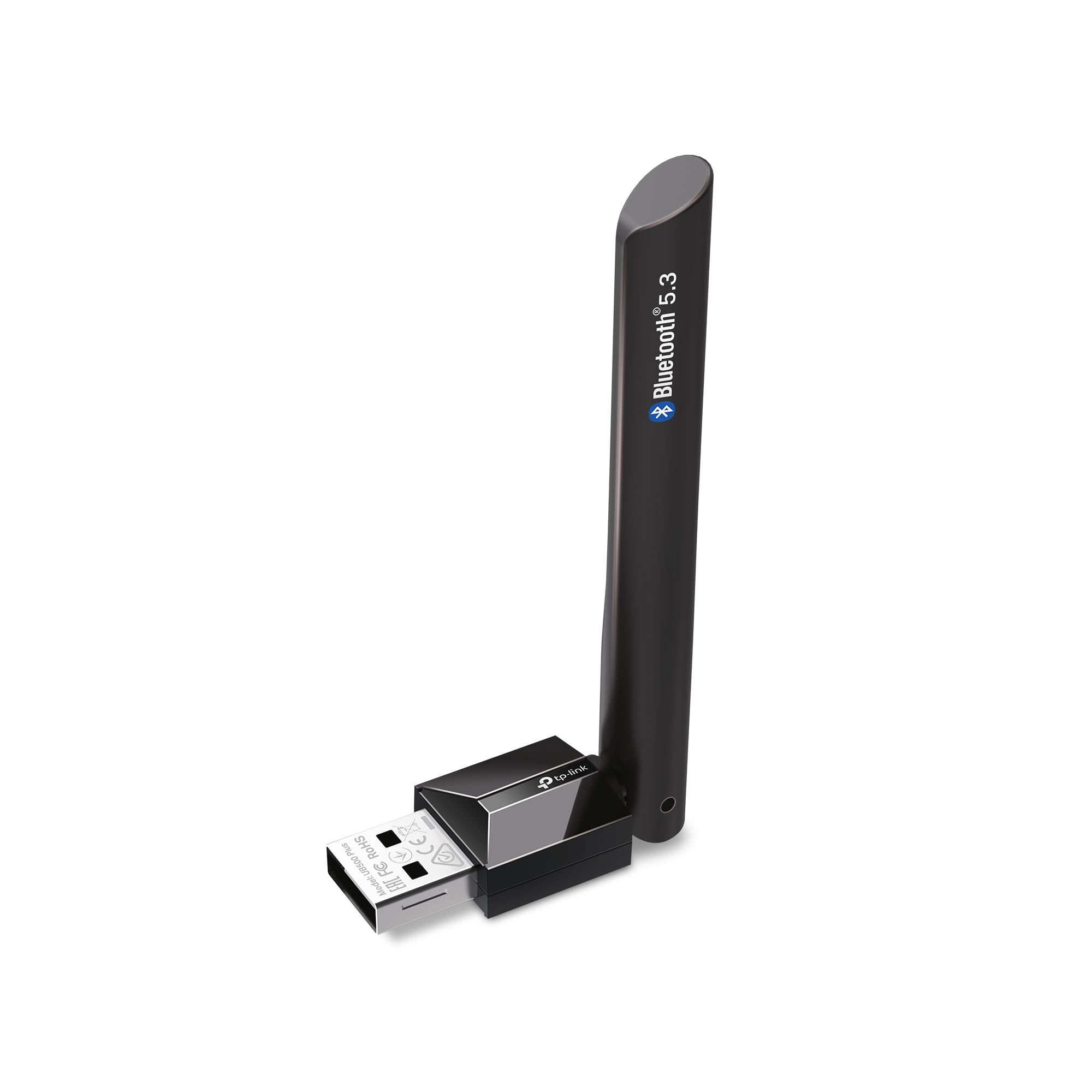
- Adjustable, multidirectional antenna can be rotated to change its orientation.

Pros
- Bluetooth 5.3 support with a wide range of backward-compatible versions.
- Adjustable antenna offers useful positioning flexibility.
Consider before buying
- Windows 7 requires a separate driver download rather than the stated plug-and-play setup.
- The setup guidance names Windows versions only; buyers using another operating system should confirm compatibility first.
Read the full review summary
The UB500 Plus combines Bluetooth 5.3 with backward compatibility for versions 4.2 through 1.1, so it can serve both newer accessories and older Bluetooth devices.
Enhanced Data Rate (EDR) and Bluetooth Low Energy (BLE) are included, while the adjustable antenna lets you change its orientation to suit the adapter’s position and surroundings.
It is aimed at Windows users who want to add Bluetooth without replacing their computer.
Windows 8.1, 10, and 11 are described as plug-and-play when the PC is connected to the internet; Windows 7 requires a separately downloaded driver.
Check your operating system and USB port access before choosing it, especially if the computer sits under a desk or in a crowded setup.
The buying factors
TP-Link UB500 Plus Scorecard
Editorial scores reflect listed features and buyer fit; they are not laboratory measurements or customer ratings.
Bluetooth version support
Bluetooth 5.3 support and backward compatibility across several earlier versions provide broad device-generation coverage.
Antenna flexibility
The multidirectional antenna can be rotated and adjusted, giving more placement options than a fixed orientation.
Windows setup convenience
Plug-and-play support is specified for Windows 8.1, 10, and 11 with internet access; Windows 7 needs a driver.
Legacy-device compatibility
Support for Bluetooth versions 1.1 through 4.2 gives it a useful range for older accessories.
Low-energy support
Bluetooth Low Energy is included alongside EDR for compatible devices and use cases.
Operating system coverage
The listed support covers Windows 7 through 11, so buyers using other operating systems should confirm compatibility before buying.
Key Features and Specifications of TP-Link UB500 Plus
- Bluetooth 5.3 support with backward compatibility for Bluetooth 4.2, 4.0, 3.0, 2.1, 2.0, and 1.1.
- Adds Bluetooth connectivity to a non-Bluetooth desktop or laptop through USB.
- Includes Enhanced Data Rate (EDR) and Bluetooth Low Energy (BLE) technology.
- Adjustable, multidirectional antenna can be rotated to change its orientation.
- Plug-and-play setup is specified for Windows 8.1, 10, and 11 when the computer has an internet connection.
- Windows 7 support requires a driver download.
Pros and Cons of TP-Link UB500 Plus
Pros
- Bluetooth 5.3 support with a wide range of backward-compatible versions.
- Adjustable antenna offers useful positioning flexibility.
- Supports both EDR and Bluetooth Low Energy.
- Setup is straightforward on the listed Windows versions from 8.1 onward when online.
Consider before buying
- Windows 7 requires a separate driver download rather than the stated plug-and-play setup.
- The setup guidance names Windows versions only; buyers using another operating system should confirm compatibility first.
- The adjustable antenna adds a positioning consideration for buyers who want a tiny, fixed-profile adapter.
Who Should Buy TP-Link UB500 Plus?
Good fit
Consider the UB500 Plus if your Windows desktop or laptop lacks Bluetooth and you want to connect compatible peripherals such as a keyboard, mouse, or headset.
Bluetooth 5.3 support and backward compatibility make it a versatile choice across newer and older devices.
It also suits setups where the USB adapter’s orientation matters: the antenna can be rotated and adjusted.
For Windows 8.1, 10, or 11, plan to have an internet connection during setup; if you use Windows 7, check that you can obtain and install the required driver.
Who should skip it
Skip it if you need confirmed support for an operating system outside the listed Windows versions. Check the adapter’s compatibility with your specific computer and accessories before purchase.
Consider a more compact fixed-profile option if you have very limited clearance around the USB port and do not need an adjustable antenna.
What the TP-Link UB500 Plus Means for a PC Bluetooth Upgrade
Bluetooth 5.3 with older-device support
The UB500 Plus supports Bluetooth 5.3 and remains compatible with a broad set of earlier Bluetooth versions.
That mix is useful when a PC needs to communicate with accessories from different generations, though each connected device still needs to support the function you intend to use.
Antenna placement in a desktop setup
The multidirectional antenna is adjustable, so you can change its orientation after plugging the adapter in.
This gives you a practical way to respond to the location of the computer and nearby equipment; the description does not establish a guaranteed range for any particular room or layout.
EDR and Bluetooth Low Energy
EDR and BLE cover two different Bluetooth capabilities within the adapter. Their inclusion gives buyers more flexibility when pairing compatible devices, while actual transfer behavior and power use depend on the connected device and how it is used.
Windows installation requirements
The setup path depends on the Windows version: plug-and-play is specified for Windows 8.1, 10, and 11 with an internet connection, while Windows 7 needs a driver download.
Buyers should confirm their exact operating system and have access to the required installation method before relying on the adapter.
Alternatives to TP-Link UB500 Plus
One useful alternative is included; compare Bluetooth version support, adapter size, and setup needs when considering other models.
Bluetooth Network Adapters alternative
3,000+ ratings
Read Amazon ReviewsSABRENT BT-UB40 USB Bluetooth 4.0 Micro Adapter
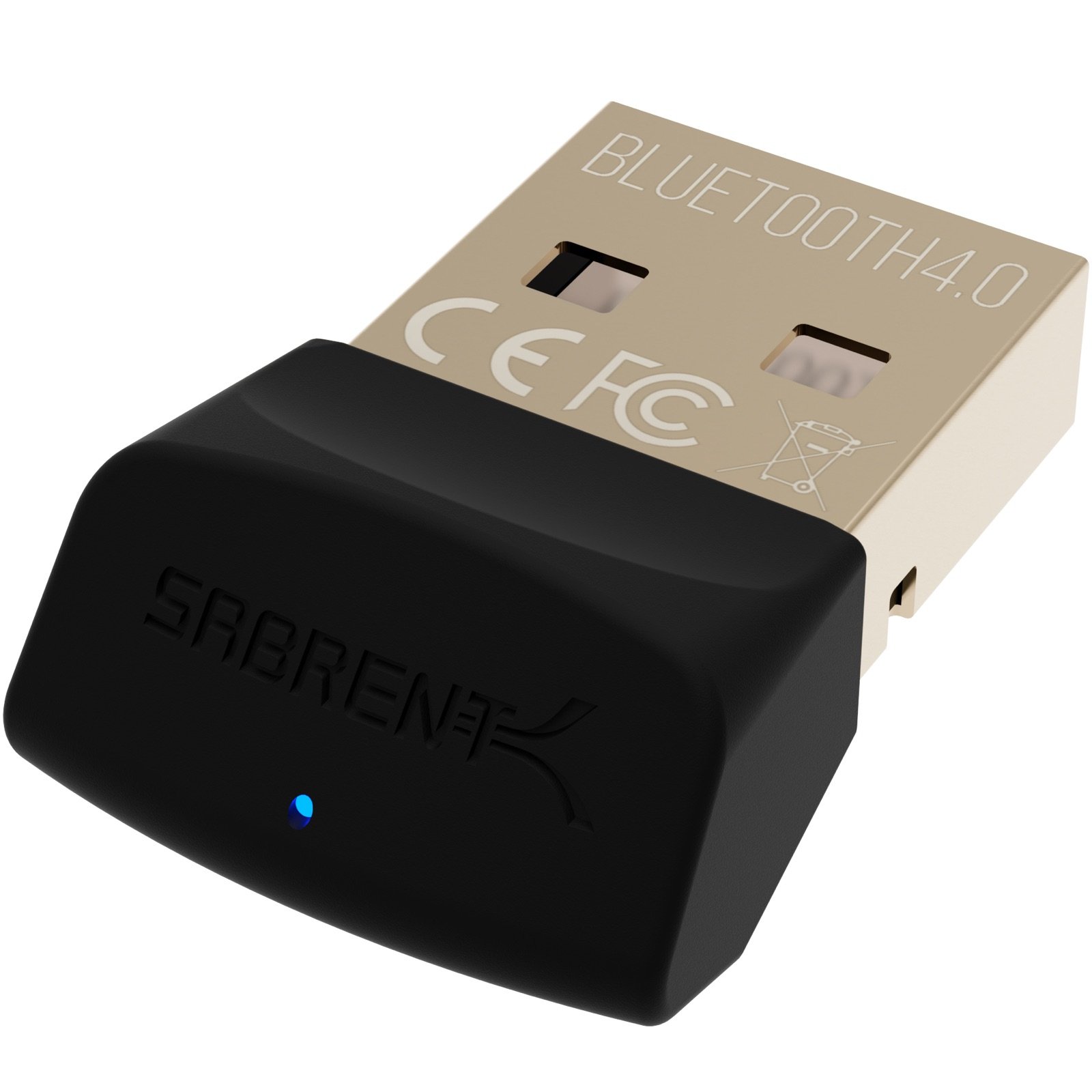
Choose the TP-Link if Bluetooth 5.3 support and adjustable antenna positioning fit your setup. The SABRENT is a more compact-style alternative for buyers whose needs match its Bluetooth 4.0 feature set and listed connection uses.
- The SABRENT BT-UB40 is a Bluetooth 4.0 Class 2 micro adapter with Low Energy support.
- Its listed uses include connecting a headset to a PC and linking a laptop with a cellular phone.
- The TP-Link UB500 Plus supports Bluetooth 5.3, includes an adjustable antenna, and lists Windows 7 through 11 support with different setup requirements.
Is TP-Link UB500 Plus Worth It?
The TP-Link UB500 Plus is worth considering for Windows PC owners who want to add Bluetooth 5.3 connectivity and value an adjustable antenna.
Its backward compatibility and EDR and BLE support give it a broad feature set for everyday peripherals.
Check the operating system requirements before buying: Windows 8.1, 10, and 11 require an internet connection for the stated plug-and-play setup, while Windows 7 needs a driver download.
If those conditions suit your computer, the UB500 Plus offers a flexible route to Bluetooth connectivity.
Your review at a glance
1,000+ ratings
Read Amazon ReviewsTP-Link UB500 Plus
A practical pick for Windows PC owners who want Bluetooth 5.3 support and an adjustable antenna for connecting everyday wireless devices.
- Bluetooth 5.3 support with backward compatibility for Bluetooth 4.2, 4.0, 3.0, 2.1, 2.0, and 1.1.
- Adds Bluetooth connectivity to a non-Bluetooth desktop or laptop through USB.
- Includes Enhanced Data Rate (EDR) and Bluetooth Low Energy (BLE) technology.
- Adjustable, multidirectional antenna can be rotated to change its orientation.